Delhi Declaration on Ending Violence Against Women and Children From Dialogue to Action Towards Viksit Bharat @2047
Delhi Declaration on Ending Violence Against Women and Children
From Dialogue to Action Towards Viksit Bharat @2047
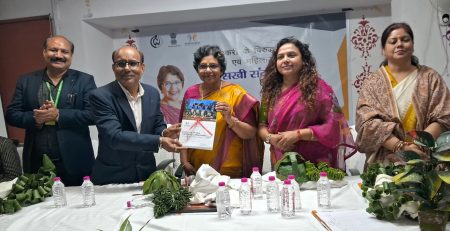
The Delhi Declaration on Ending Violence Against Women and Children marks a significant national commitment to safeguarding the rights, dignity, and well-being of women and children in India. The Declaration was formally presented by the organisers to Smt. Savitri Thakur, Hon’ble Minister of State for Women and Child Development, Government of India, during the National Symposium “संवाद से संकल्प तक – For Every Woman and Child”, held on 12–13 January 2026 at NDMC, New Delhi.
A Collective National Vision
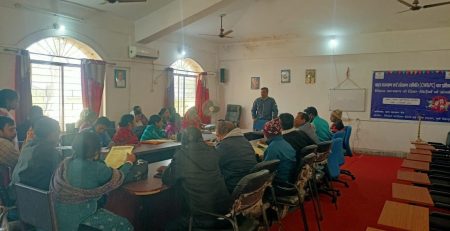
The Declaration emerged from two days of intensive national dialogue that brought together representatives from the Government of India, civil society organisations, community leaders, youth and women champions, survivor collectives, researchers, and development practitioners. Anchored in the Constitution of India, aligned with national child- and women-centric legislation, and reflective of India’s commitments under the Sustainable Development Goals, the Declaration is firmly rooted in the vision of Viksit Bharat @2047.
It recognises that the safety, education, dignity, protection, and holistic development of every woman and every child are fundamental to India’s inclusive, equitable, and sustainable growth.
Priority Areas of Commitment
Ending Child, Early and Forced Marriage
Recognising child marriage as a grave violation of child rights and a barrier to education, health, and gender equality, the Declaration calls for strengthened prevention through community mobilisation, awareness, counselling, and social protection support. It emphasises improved access to education, higher education, safe transport, scholarships, vocational training, and livelihood opportunities for girls.
Elimination of Child Labour
To break cycles of intergenerational poverty, the Declaration stresses strong prevention, rescue, rehabilitation, and reintegration mechanisms. It calls for dedicated child labour monitoring mechanisms in high-risk districts and improved convergence between labour, education, women and child development, and social welfare departments, alongside family strengthening and social security support.
Prevention of Trafficking of Women and Children
Addressing trafficking for labour, sexual exploitation, forced marriage, and other forms of abuse, the Declaration prioritises prevention in migration-prone areas, awareness on safe migration, survivor-centred rehabilitation, and long-term reintegration. It also highlights the need for strengthened inter-state coordination, effective law enforcement responses, digital safety measures, and strict enforcement of anti-trafficking laws.
Strengthening Families by Empowering Women
The Declaration recognises women’s empowerment as central to building resilient families and ensuring child well-being. It promotes vulnerability mapping to identify at-risk women, children, and families and guide targeted support under flagship child protection and social security programmes. The approach of “One Village – One Unified Plan” is highlighted to strengthen village-level planning through collaboration among women’s collectives, Panchayats, and local administration.
Building Protective and Responsive Systems
The Declaration emphasises system strengthening and community-led prevention through:
-
Mandatory pre-service and in-service training for frontline workers such as teachers, Anganwadi Workers, and ASHAs
-
Capacity building of Panchayati Raj Institutions, Urban Local Bodies, School Management Committees, and Self-Help Groups on child and women protection laws and schemes
-
Integration of child protection priorities into Gram Panchayat Development Plans with strategic use of local resources
-
Strengthening adolescent health, life skills, and school retention through convergence with national health and education programmes
-
Professionalisation and strengthening of child protection services and helplines
Focus on High-Risk and Marginalised Communities
The Declaration calls for prioritised action in hotspot districts, blocks, and marginalised communities. It underscores the importance of addressing structural drivers of child marriage, trafficking, and child labour through integrated interventions in education, health, livelihoods, and life skills.
From Declaration to Action
The formal presentation of the Delhi Declaration signifies a shared commitment between civil society and the Government of India to move from dialogue to action. It calls for adequate financial and human resources, strong convergence across sectors, clear accountability mechanisms, and robust monitoring frameworks to ensure effective implementation in alignment with the vision of Viksit Bharat @2047.
A Shared Commitment for India’s Future
The Delhi Declaration represents a collective resolve to work together across government, civil society, academia, media, private sector, and communities. Together, it envisions an India where every woman and every child is safe, protected, educated, empowered, and enabled to realise their full potential.